
2026-10-17 ·
Metal Roofing vs. Shingles for Rainy and Humid Conditions in Longview, TX
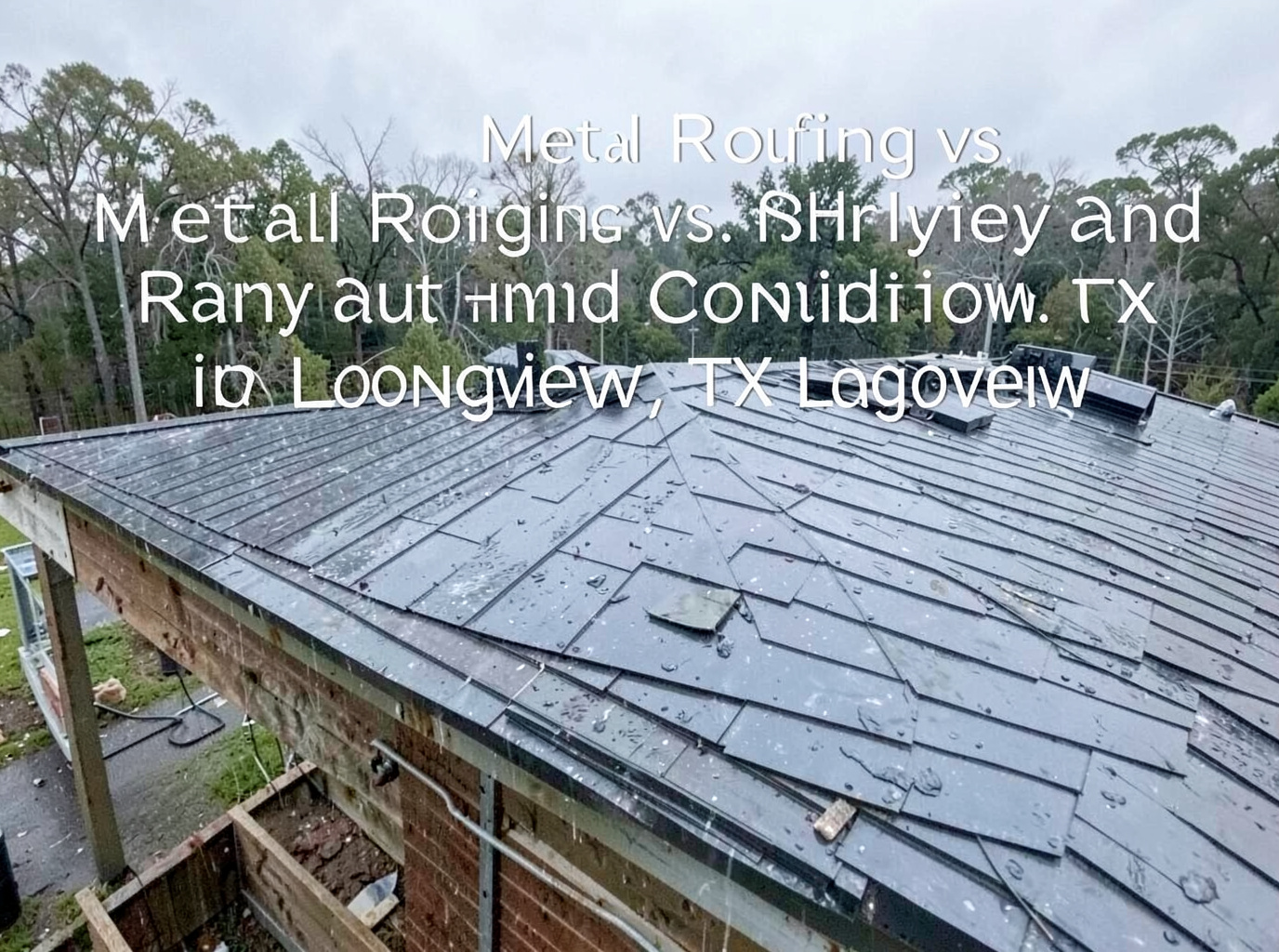
In Longview's rainy and humid conditions, metal roofing generally outperforms shingles by resisting moisture buildup and lasting 40-70 years compared to 20-30 years for asphalt shingles on Gregg County homes.
Longview Climate Effects on Roofing Materials
Longview sits in Gregg County with hot humid summers that trap moisture against roof decks and mild winters punctuated by frequent thunderstorms. Homes in Downtown Longview, Pine Tree, and near the Longview Mall often face prolonged humidity that accelerates algae growth on shingles while metal panels shed water quickly. Thunderstorms bring high winds and driving rain that can lift shingle edges or force water under flashing on older homes along Eastman Road. Metal systems handle these cycles with fewer leaks because seams stay tight even after repeated expansion from heat and contraction during cooler nights. Residents in North Longview and Spring Hill notice that asphalt shingles on 1970s-1990s housing stock degrade faster under constant humidity, requiring earlier intervention than metal roofs installed on the same properties.
Moisture Resistance Comparison
Metal roofing sheds water immediately during heavy downpours common to the region, reducing the chance of standing water that leads to deck rot. Shingles absorb some moisture in humid periods, which can shorten their service life when combined with the area's clay-heavy soils that hold groundwater near foundations. In neighborhoods like Judson and along East Loop, metal panels installed over proper underlayment prevent condensation issues that plague vented attic spaces in older frame houses. Asphalt shingles need frequent inspections after storms to catch granule loss or curling that allows seepage. Both materials work when matched to the home, yet metal maintains its integrity longer under the repeated wetting and drying cycles seen from spring through fall in Gregg County.
Lifespan and Upkeep in Local Conditions
Metal roofs typically reach 40-70 years with minimal upkeep in Longview's climate, while shingles average 20-30 years before replacement becomes necessary. Homeowners in areas such as White Oak or near Maude Cobb Convention Center report that metal requires only occasional seam checks, whereas shingles often need cleaning to remove mildew fostered by summer humidity. Thunderstorm winds can dislodge shingles more readily than fastened metal panels, increasing repair frequency on exposed properties. Proper ventilation and insulation matter for both systems, but metal's reflective surface helps moderate attic temperatures during peak summer heat. Regular gutter maintenance prevents overflow that affects either material, yet metal edges resist corrosion better when paired with quality flashing around chimneys and valleys common on Longview homes.
Practical Decision Factors for Homeowners
Budget, home age, and storm exposure guide the choice between metal and shingles for properties in Kilgore, Marshall, Gladewater, or central Longview. Metal installation costs more upfront but reduces long-term replacement cycles in thunderstorm-prone zones. Asphalt shingles offer lower initial expense and faster installation on simpler rooflines found in many Spring Hill residences. Review your attic ventilation and existing deck condition before deciding, especially on homes near the Alley-Carlson House historic district where roof pitch and aesthetics factor in. Metal roofing installation or asphalt shingle roof replacement both address local needs when performed by crews familiar with Gregg County wind loads and humidity patterns. Check recent storm history and consult storm and wind damage guidance for your specific address.