
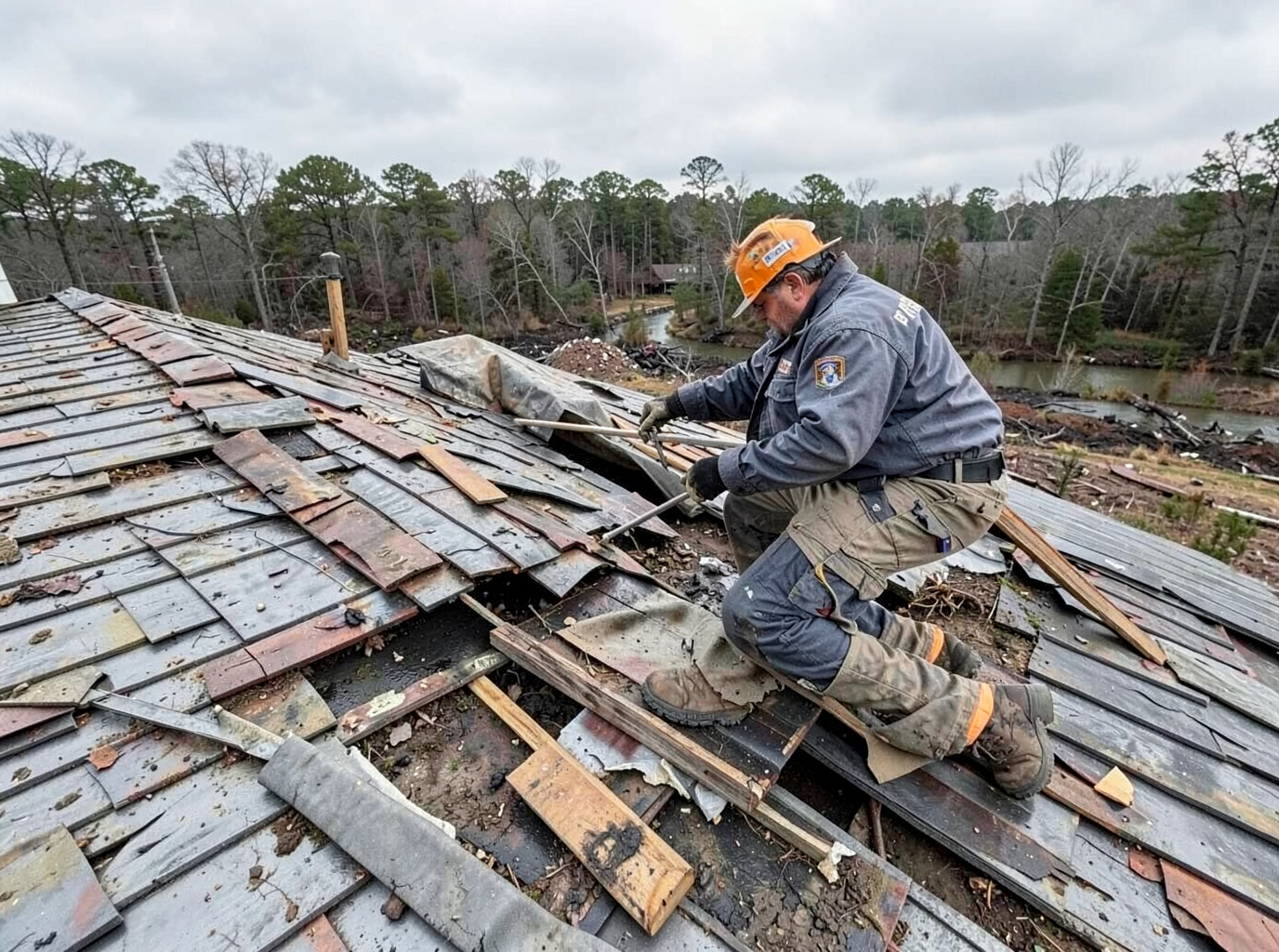
Thunderstorms roll through Gregg County several times each season, bringing hail that pits asphalt shingles and wind gusts that loosen flashing around chimneys and vents. Homes in Pine Tree and North Longview often have 20- to 30-year-old roofs that already show granule loss, so a single storm can turn minor wear into active leaks. We inspect decking for soft spots created by trapped moisture, especially where tree cover from the Alley-Carlson House area shades roofs and slows drying.
Wind-driven rain finds its way under lifted shingles along eaves and valleys, then travels along felt paper into attics over living spaces in Spring Hill and Judson. Older construction in Downtown Longview frequently uses plywood decking that delaminates once water sits for more than a few days. We pull back damaged sections, replace saturated underlayment, and match shingles to existing weathering so the repair blends without drawing attention from neighbors.
Eastman Road corridors see more open exposure, so straight-line winds can tear ridge caps and leave nail pops along the ridge board. After each event we check attic insulation for saturation that leads to mold once humidity climbs back into the 80s. Repairs focus on restoring the original ventilation path so the attic can dry between storms rather than trapping moisture for the next round.
We coordinate with homeowners on timing so work happens before the next front moves in from the west. Tarps go up the same day when decking is exposed, and final shingles are installed only after the surface is fully dry to prevent blistering in the humid summer air that follows.
Technician insight
In Longview the thing that catches most people out with Storm Damage Roof Repair is how quickly wind-driven rain travels under lifted shingles on the older plywood decks found in Pine Tree and Judson; once the felt is wet it stays damp for days in our humidity and the next thunderstorm finishes the job.
Wind damage on a Pine Tree roof
Straight-line winds tore ridge caps and lifted shingles along the south slope. We found saturated felt and soft decking near two plumbing vents. We replaced the damaged deck sections, installed new underlayment and shingles, then added extra ridge venting to restore airflow before the next front arrived.
Storm Damage Roof Repair Services We Offer
✓Hail Damage Assessment
We map impact patterns across the entire roof plane and document granule loss so insurance adjusters see the full extent of storm damage.
✓Wind Uplift Repair
Re-secure lifted shingles and replace torn ridge vents that allow wind-driven rain into attics on exposed lots along Eastman Road.
✓Hidden Leak Detection
Use moisture meters and attic inspection to locate water that traveled under shingles after thunderstorms, then repair before mold sets in.
✓Flashing and Valley Restoration
Replace corroded step flashing and reinforce valleys that funnel water during heavy downpours common in Gregg County.
✓Emergency Tarping
Install temporary reinforced tarps over exposed decking the same day to protect interiors until permanent repairs can be completed.
✓Shingle and Decking Replacement
Remove hail-crushed shingles and replace any soft plywood sections so the roof plane remains solid for the next storm season.
Storm Damage Roof Repair Cost in Longview, TX
| Service | Typical Range | What Affects It |
|---|---|---|
| Initial storm assessment | $150–$300 | Roof size and number of slopes affect time on site. |
| Emergency tarping | $400–$850 | Height and wind exposure change labor and materials. |
| Hail-damaged shingle replacement | $1,800–$4,200 | Square count and whether decking needs replacement. |
| Flashing and valley repair | $650–$1,400 | Metal type and number of penetrations. |
Ranges are typical for Longview, TX and confirmed with an exact written quote before any work starts.
How it works
- 1
On-Site Storm Assessment
We walk the roof and attic, checking for hail bruising, lifted shingles, and moisture in decking around vents and valleys.
- 2
Photo Documentation
Detailed photos of every affected area are taken for insurance claims and to plan material orders.
- 3
Targeted Repair
Damaged sections are removed, underlayment is replaced where wet, and matching shingles are installed with proper nailing patterns.
- 4
Final Leak Check
A water test confirms no active leaks remain, and attic ventilation is verified before we leave the site.
Pricing
Upfront written quotes after inspection; price depends on storm extent and access.